Service Escalation Notes for Automatic Egg Roll Machines
Service escalation works best when the plant sends evidence, not frustration. One supplier can respond faster when the note shows the model, product condition, setting values, sample result, and actions already tried. Without that evidence, the first support conversation often becomes a basic discovery call.
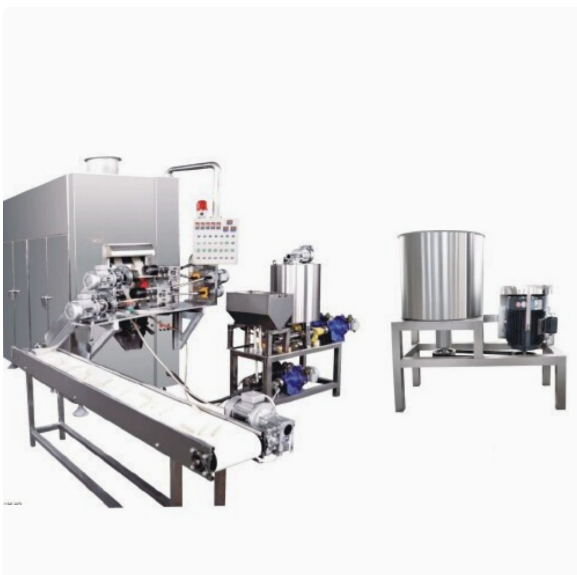
UDTECH lists the UD05-2 at 220 pieces per minute and about 600 kg per 8-hour shift. At release time, the UD05-3 is listed at 330 pieces per minute and about 900 kg per shift. Listed functions include temperature control, wrapper thickness control, automatic core injection, and forming. In practice, a good escalation note ties the service question to one or more of these control points.
Escalate with a narrow question
A broad message saying the machine is unstable does not guide support. For the plant, a narrow question might ask why color drifts after a twelve-minute pause at the same set point, or why filling moves after a cleaning sequence. Narrow questions help support teams identify the evidence they need next.
Operators should not wait until every detail is perfect. They should send enough proof to describe the condition honestly and ask for the next diagnostic step.
Build the service escalation note
Service escalation note for an automatic egg roll machine
| Note field | Evidence to include | Why support needs it |
|---|---|---|
| Machine and product | Model, recipe, shift, speed window, and production goal | Sets the operating context |
| Symptom | Sample photo, defect wording, timing, and repeat count | Shows what actually changed |
| Control point | Temperature, wrapper thickness, core injection, or forming observation | Connects the symptom to a technical path |
| Actions tried | Setting change, cleaning step, maintenance check, and result | Prevents repeated advice |
Use operator notes before calling support
Operator notes should be reviewed before escalation. They may show that the issue appears only after restarts, only on one shift, or only after a filling change. Those clues help the plant decide whether the question belongs to training, maintenance, process flow, or supplier support.
An automatic egg roll machine service escalation process should not replace local troubleshooting. In practice, it should organize local troubleshooting so the supplier can respond with better context.
Keep temperature evidence specific
Temperature questions need set point, warm-up time, pause length, and sample color. During review, a note saying the heater seems wrong is weak. Each note showing that two restarts produced pale samples after the same pause length is much stronger. It gives support a repeatable condition to review.
UDTECH’s temperature control feature should therefore appear as a data point in the note. On the floor, the plant should describe what was set, what was observed, and what changed after action.
Describe wrapper and filling symptoms separately
Wrapper thickness and automatic core injection should be described separately at first. For cases where both are changed before support sees the evidence, the cause becomes harder to isolate. From a manager’s view, the note should say whether cracks, loose rolling, off-center filling, smear, or cleaning delay appeared first.
Support may later connect the symptoms, but the plant should not collapse them into one vague quality issue. Separate notes produce better questions.
Name limits before escalating
The escalation note should name limits. Missing packaging labor, unstable material, or untrained operators can look like machine faults. If the plant already knows one of those limits exists, it should be written in the note. Support can still help, but the answer may be process guidance rather than a machine adjustment.
Another limit is urgency. If a customer order is active, the plant may need a temporary containment step before a permanent fix. During this review, the note should say whether the request is for immediate production recovery or a slower root-cause review.
Close the note with one requested action
Every escalation should end with one requested action. Ask for a setting review, a diagnostic sequence, a part check, or a remote support call. One request is easier to answer than a long list of concerns.
After support responds, record the advice and the next run result. That turns escalation into a learning record for the plant instead of a one-time message.
Decide what stays local
Before escalating, the plant should decide which issues can be solved locally. Operator language, packing flow, material staging, and basic cleaning discipline often need local action first. Escalating those items too early can slow the real fix because the supplier is asked to solve a plant process problem.
UDTECH support is most useful when the question touches machine behavior or requires technical confirmation. One clear note showing local checks helps separate those cases. For the shift leader, the plant can still mention local limits, but the request should say what supplier input is needed.
Use photos without relying on photos alone
Photos can help service teams, but they should not replace words. In practice, a photo of a cracked wrapper is stronger when the note also shows the setting, pause history, and sample count. For the plant, a photo of filling drift needs cleaning context and flavor change history. Words turn the photo into evidence.
In practice, the escalation note should therefore pair each image with a short explanation. This makes the record easier to review later and reduces repeated questions.
Track response quality
After an escalation, the plant should track whether the response solved the issue. During review, a support call may produce a setting review, a cleaning sequence, or a part inspection. At release time, the next run should show whether the advice changed the condition. Without that closing record, the same issue may be escalated again with no learning.
Support quality is not only supplier speed. It is whether the advice connects to the evidence and improves the next production window. The plant owns that measurement.
Keep escalation notes in the maintenance file
Escalation notes should live with maintenance and production records. If they stay only in email or chat, the next shift may never see them. A shared file lets operators compare current symptoms with previous advice before opening another request.
Over time, the escalation file becomes a local troubleshooting guide. It shows how the automatic egg roll machine behaved under real plant conditions and how each response was tested.
Create an escalation threshold
The plant should define when a service issue deserves escalation. One rejected sample may only need local review. Three repeated restart failures, a recurring temperature pattern, or a filling issue that survives cleaning may justify supplier input. A threshold protects the support channel from noise while making serious patterns easier to report.
The threshold should be visible to operators and supervisors. When everyone knows the rule, workers are less likely to delay a real request or escalate a weak one.
Separate urgent recovery from root-cause review
Service notes should say whether the plant needs urgent recovery or root-cause review. Urgent recovery may ask for a temporary setting boundary or diagnostic order that lets production continue. Root-cause review can take more time and may require records from several shifts. Mixing these goals can frustrate both sides.
UDTECH support can respond more clearly when the request names the goal. The same symptom may receive a containment answer today and a deeper review after the production window closes.
Turn each escalation into a local lesson
After the supplier responds, the plant should decide whether the answer changes standard work. A setting check, cleaning step, sample rule, or maintenance inspection may need to move into the operator checklist. Otherwise the same issue may return when a different shift is on duty.
Escalation has the most value when it improves the plant’s own decision system. The final note should say what changed, who owns the change, and which proof will show whether it worked.
Keep escalation language consistent
Escalation notes should use the same symptom names as operator and maintenance records. If one file says loose roll and another says weak forming, support may need extra time to understand whether both notes describe the same condition. Consistent language makes evidence easier to compare.
A short glossary can help during the first month. It can define color drift, wrapper cracking, filling smear, off-center filling, and restart delay. Shared words reduce confusion before the support request is written.
The glossary should be updated when support uses a better term. If UDTECH describes a symptom in a more precise way, the plant can add that phrase to the local file. Over time, escalation language becomes cleaner and easier for every shift to use.
Clean language also reduces repeat tickets. When operators use the same terms, support can compare current evidence with prior cases and avoid restarting the diagnosis from zero.
Escalation notes should close with a learning owner. That person checks whether the new term, setting rule, or sample instruction reached the operator checklist and maintenance log.
A learning owner should confirm the change during the next shift meeting. Otherwise the answer may stay in the support thread and never reach the floor.
Once the floor uses the same language, service requests become shorter, clearer, and easier to compare with prior evidence.
Shared service language also helps new supervisors read older cases.
That continuity matters when staff rotate between shifts.
It also shortens future support calls.
Keep notes current.